Commercial Waste Removal in Tooting
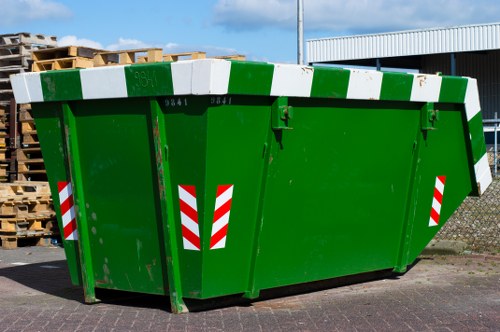
Commercial waste removal in Tooting needs a practical service that keeps business premises clear, work areas usable and collections straightforward to manage. Our service covers everyday trade waste, bulky commercial items and recurring clear-outs for premises that need regular attention. Whether you are refreshing an office, clearing stockroom clutter or moving out redundant equipment, we provide a direct, organised approach that suits the pace of your business. If you are planning a disposal job, start with a clear list of what needs removing and ask for a tailored quotation.
We handle mixed commercial waste streams with care, separating recyclable items where appropriate and managing loading so that access is kept as tidy as possible. Typical work can include furniture, desks, shelving, packaging, obsolete stock and general non-hazardous waste generated by day-to-day operations. For items that need extra handling, such as appliances or confidential materials, the right route depends on what is being removed and how it must be processed. Our pricing and quotes page explains the sort of information that helps shape an accurate estimate.
Many businesses prefer a simple process: identify the waste, choose a convenient collection point and agree the scope before work begins. We make that easier by keeping the service focused on the actual removal task rather than unnecessary admin. If you want to compare disposal options for a shop, office or workshop in Tooting, the next step is easy: ask for a quotation and describe the items you need cleared.
Office and business clearances
Office waste removal is often more than a one-off collection. It may involve clearing workstations, loose chairs, filing units, meeting-room furniture and general waste that builds up during relocations or refurbishments. Our service is suited to businesses that want to dispose of items methodically while keeping the premises workable. We can remove office contents in stages or as a single clearance, depending on the volume and layout of the site.
For larger business premises, careful sorting helps reduce disposal costs and supports better recycling outcomes. Keep reusable furniture separate from broken items where possible, and identify anything that should not be mixed with everyday waste. If you also need ongoing support, business waste removal gives a useful route for routine commercial collections. That can suit firms that generate steady volumes of non-hazardous waste and want a dependable way to keep storage areas under control.
- Workstations, desks and office seating
- Filing cabinets, shelving and storage units
- Packaged office waste and mixed non-confidential rubbish
- Outdated equipment waiting for disposal or recycling
Furniture, fixtures and bulky items
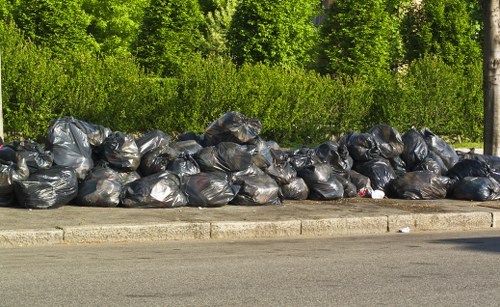
Commercial premises often need bulky items removed before a refit, tenant change or closure. Furniture clearance can include items from reception areas, staff rooms, storage spaces and customer-facing interiors. Where suitable, items may be separated for re-use, recycling or disposal depending on condition and material. The aim is to remove the clutter efficiently without disrupting the rest of the site more than necessary.
If your waste includes large single items rather than a full clearance, it may be better to focus on item-specific disposal. Furniture disposal is relevant when you have particular pieces to remove and want a straightforward route for getting them out of the way. For individual bulky items such as mattresses or sofas, a focused page like mattress and sofa disposal may be more appropriate than a wider clearance service.
Commercial furniture work can be arranged around access limits, loading points and the condition of the items. If access is tight, it helps to know in advance whether anything is too large to pass through internal doors or corridors, and whether dismantling will be needed. Give a simple description of the items and the type of premises, then request a quote that reflects the actual removal task.
Light demolition waste and refurbishment debris
Some commercial waste jobs in Tooting are generated by internal alterations, decorating or strip-out work rather than ordinary day-to-day rubbish. Builders waste clearance is useful when the material includes broken fittings, old boards, packaging from new installations, plaster-derived waste or mixed debris from small renovation projects. This type of removal needs a practical approach because the load may contain awkward shapes, dustier material or heavier items than standard office waste.
Where a premises is being updated in phases, collections can be planned to keep the site functional while the work continues. It helps to separate clearly reusable fixtures from the waste that is ready to go. For more general construction-related items, builders waste clearance offers a route that is better matched to renovation debris than a standard business clearance. If you are unsure what can be taken, provide a brief list and ask for confirmation as part of the quotation process.
Not every commercial site needs the same disposal method, so the most sensible choice is the one that matches the material. Packaging, timber offcuts, redundant displays and broken fittings can often be removed together if they are described clearly beforehand. Accuracy matters more than volume when the job involves mixed refurbishment waste, so a concise inventory is helpful.
Storage rooms, lofts and back-of-house areas
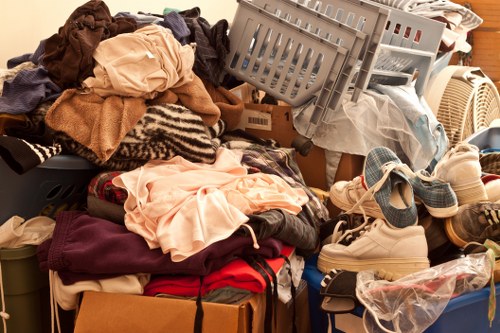
Businesses sometimes need more than visible floor space cleared; they also need hidden storage areas dealt with properly. Loft clearance and garage clearance can be relevant for premises with overspill stock, archive material or old equipment stored away from daily operations. These areas often contain mixed items, so an orderly approach is essential if the aim is to reclaim usable space without disturbing items that still need to stay.
Where the stored material is no longer needed, a structured clear-out can be safer and quicker than moving things around repeatedly. If you have mixed household-style overflow and business items, loft clearance is a useful route for upper-level storage spaces, while garage clearance suits ground-level storage and back-of-house areas. For premises where the whole property is being emptied, broader pages such as home clearance or house clearance may be more relevant, depending on the setting.
Storage spaces often hide items that are awkward to assess from the doorway alone. Labels, bins and grouped boxes help separate keepable things from waste, especially when the area contains a mixture of archived material and disposable clutter. If you want the removal to be efficient, prepare the space as much as you reasonably can and then request a quotation based on the actual contents.
Appliances and specialist disposal streams
Commercial premises sometimes need more than ordinary mixed waste removal. Fridges, freezers and other appliances need the correct handling route, especially when electrical equipment is no longer in service. We can support disposal jobs where the item type is known in advance and the collection needs to be organised around access, size and safe lifting. This keeps the process clear for offices, food-related businesses and sites with tired equipment ready for replacement.
For specific appliance jobs, a dedicated route is often the cleanest option. Fridge and appliance removal is useful when the main task is the collection of one or more white goods rather than a full business clearance. Some materials need extra caution, and not every load can be treated the same way. If your waste includes items that may be restricted or need separate assessment, hazardous waste disposal is the page to review before you arrange collection.
Specialist disposal is best planned around the exact items involved, not a generic description of “wasteâ€. Please identify the appliance type, quantity and any access constraints so the collection can be matched properly to the job. That also helps when you are deciding whether the waste belongs in a general commercial collection or a more specific service stream.
Confidential material and secure handling

Some businesses have waste that is not only bulky but sensitive. Old paperwork, records, audit files and other confidential materials should not be treated as ordinary rubbish if they contain private or commercial information. A dedicated shredding route is important when documents need secure destruction rather than basic removal. This is especially relevant for offices, professional practices and firms with archived paperwork that is ready to be cleared responsibly.
If document destruction is the main need, confidential shredding provides a more suitable option than standard waste removal. It is also sensible to separate confidential files from general recycling and from items that may contain batteries, toner or other components needing different processing. When you prepare the enquiry, note the material type, approximate quantity and whether the documents are loose, boxed or stored in cabinets so the service can be quoted accurately.
Secure handling is about process as much as disposal. The aim is to keep the journey from storage to removal straightforward, with the right treatment assigned to the right material. If your business has both confidential and ordinary waste, it can be sensible to divide the job into distinct parts rather than bundling everything together without description.
Prices, collection planning and useful choices
Commercial waste removal is usually priced according to the type of items, the amount to be taken, access to the premises and any specialist handling required. Mixed loads can take more sorting than straightforward collections, while bulky furniture or appliance work may involve extra labour. Pricing and quotes is the best place to review how an estimate can be built from the details you provide, rather than from guesswork about the site.
To keep the process smooth, provide a simple account of the waste, any storage points, loading restrictions and whether the items are already gathered together. That is usually enough to shape an informed quotation. If you are comparing disposal routes, it can help to decide whether the job is a one-off clearance, a recurring waste issue or a specialist removal with a separate handling method. Clear information leads to clearer pricing and fewer surprises later on.
For businesses in Tooting, the best preparation is practical rather than complicated. A short list, a few photos if requested and an indication of access are generally enough to begin. Once the scope is clear, you can ask for a quotation and move the job forward with confidence.
About Tooting
Tooting is a district in the London Borough of Wandsworth, in south-west London, and is commonly associated with a lively stretch of high street activity, residential streets and a strong sense of everyday urban character. The area sits between neighbouring parts of south London and is served by Tooting Broadway and Tooting Bec stations on the Northern line, giving it a direct connection into central London. Historically, Tooting developed from a rural settlement into a more built-up suburb as transport links, housing growth and local commerce expanded during the nineteenth and twentieth centuries. Today, it presents a mix of Victorian and later terraced housing, local independent shops, larger retail frontages and community facilities that reflect the layers of its development.
More on commercial waste options

Different premises need different disposal routes, and that is why a single commercial waste label can be too broad. An office clear-out, a shop refit and a storage-room purge may all produce waste, but the mix of materials can be very different. We keep the service flexible enough to deal with ordinary business rubbish while still recognising when items need a more specific route. That includes separating office furniture, handling appliance collections and identifying when confidential or specialist material should not be treated as general waste.
If you are comparing service pages, it may help to look at the task from the item itself. Furniture, documents, appliances and mixed business rubbish all raise different practical questions, and the right route should match the material rather than the assumption that everything can go together. Office clearance is useful where the job is centred on desks, chairs and work areas, while waste removal suits broader non-specific loads that still need a straightforward collection.
When you are ready, ask for a quotation that reflects the actual contents and the access available. If you are still deciding between a general or specialist route, a brief description of the items is usually enough to point you in the right direction. Send the details that matter most and choose the service that fits the job.
Commercial waste removal for regular and one-off jobs
Some businesses need scheduled support, while others only need a single collection after a move, clear-out or refurbishment. Our approach suits both because the service can be tailored to the amount and type of waste rather than forcing every customer into the same pattern. For recurring needs, the emphasis is on keeping waste areas manageable; for one-off jobs, it is on getting the site cleared efficiently and sensibly.
The most useful details are often the simplest: what you want removed, where it is located and whether anything needs to be separated from the rest. If the job includes furniture, stock, packaging or equipment, saying so at the outset makes it easier to produce a focused quotation. You can also review about us if you want broader background on the business before making contact.
For a clear next step, gather the key facts and request a quotation. That keeps the job moving without unnecessary back-and-forth and helps ensure the right disposal route is chosen for the waste involved.
Arrange a quotation
Whether you need a single office clearance, bulky item removal or a wider commercial waste collection in Tooting, the main goal is the same: remove the waste cleanly and match the service to the material. We can support that with a practical, item-led approach that keeps the work straightforward from the first description through to collection day. If you need more detail on how collections are handled, the relevant service pages above can help you narrow the best fit.
If your waste includes several different categories, split them in your notes so the quotation can reflect the real scope. That is particularly helpful for mixed commercial jobs where furniture, appliances, records and general rubbish appear together. For businesses that want a better idea of the process before booking, book online is available as a direct route to begin the next step.
For the final step, ask for a quotation and include the key details in one message. Tell us what needs removing, where it is located and when you would like the collection to take place, and we can help you move forward in a clear, businesslike way.